






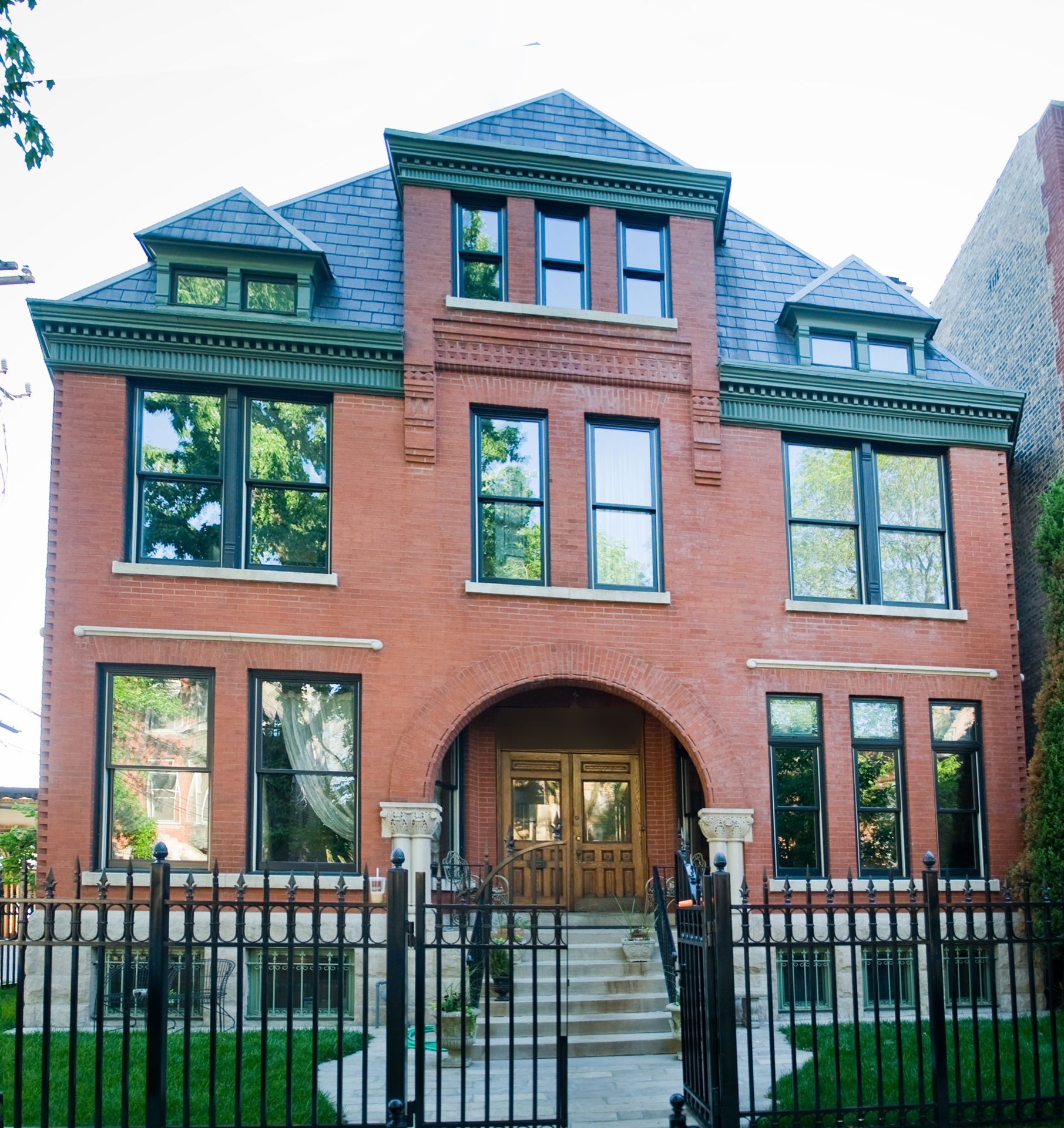
If your Chicago home is a designated Chicago Landmark, or stands in a landmark district, your building permits are reviewed by the city’s Historic Preservation Division on behalf of the Commission on Chicago Landmarks. The review asks one question: will the work harm the features the designation protects? In a district, those are typically the exterior walls you can see from the street, so windows, masonry, additions and demolition get the closest look.
This guide explains what landmark status means for a remodel, how to check whether your property is designated, which work triggers review, and how the process runs. It is written for homeowners planning exterior remodeling in Chicago on an older house. Rules change, so treat it as a guide to the right questions as of November 2026, and confirm your project with the city or your contractor.
What Landmark Status Means for Your Home
Designating a Chicago Landmark is a legislative act of the City Council, made on the recommendation of the Commission on Chicago Landmarks. The Commission was established in 1968 and has 9 members appointed by the mayor with City Council consent. It is staffed by the Historic Preservation Division of the Department of Planning and Development.
Designation protects what the city calls a property’s significant historical and architectural features. Those features are defined at the start of the designation process and written into the designation ordinance the City Council adopts. That ordinance is the document that tells you what, on your house, the city is protecting.
Individual Landmarks and Landmark Districts
A property can be an individual landmark, or a building within a landmark district. For an individual landmark, the designation ordinance lists the specific features that are protected, and in some cases those include designated interior features.
For landmark districts, the city’s guidance for owners says the significant features typically are the exterior building elevations visible from the public right-of-way. When the City Council created the Bryn Mawr Avenue District in Edgewater in September 2026, the city described district designation as protecting “the exteriors of contributing buildings against significant alteration or demolition.”
How to Check Whether Your Property Is Designated
Confirm your status before design begins, not after the drawings are done. Review is not limited to finished designations. Once the Commission votes a preliminary recommendation for a property, that vote puts its authority to review building permits in place for the rest of the designation process.
4 places to check:
- The official lists. The Department of Planning and Development’s landmark publications page posts the Official Chicago Landmarks Address List and Name List.
- The Chicago Landmarks website. Its alphabetical list is searchable, but the site notes that its narratives cover only a portion of the city’s designations. A missing name is not a no.
- The Chicago Historic Resources Survey. This city database of 17,371 properties records each one’s Chicago Landmark status, along with its date of construction, architect and style.
- The Historic Preservation Division. It staffs the Commission and can be reached at 312.744.3200 with questions about a specific address.
New designations still happen. The Bryn Mawr Avenue District became official on September 23, 2026, so check again if your project has been on hold.
A Survey Rating Is Not a Designation
The Historic Resources Survey also rated buildings by color. A building rated red or orange is not automatically a landmark, but it is covered by the city’s Demolition-Delay Ordinance. Adopted in 2003, it places a hold of up to 90 days on a demolition permit for those buildings while the city explores ways to preserve them, including landmark designation. The red and orange ratings appear on the city’s zoning map.
Which Work Triggers Landmark Review
The Commission reviews proposed alterations, demolitions and new construction that affect individual landmarks or properties in landmark districts. The Historic Preservation Division says it reviews all permit applications for work on designated and proposed landmarks and districts. The test is whether the work will adversely affect the protected features.
Exterior Changes, Windows and Masonry
The Commission’s submission checklist has covered alterations involving siding, masonry, roofing, windows, doors, skylights, decorative features, fences, lighting, mechanical equipment, driveways and curb cuts. Requirements may change, so confirm the current list with staff. Two deserve a closer look:
- Windows. The checklist may ask for large-scale, side-by-side drawings of the existing and proposed windows for each window type, with sections showing the profiles of sashes, muntins, meeting rails, sills and brick molds. Staff may request a mock-up or sample unit.
- Masonry. For tuckpointing and repairs, it may ask for specifications, the mortar joint profile and patching details. For cleaning, it may ask for product and testing information. Staff may request a test patch or mortar analysis.
The city also publishes adopted policies that apply to specific work, including a siding repair and replacement policy and dormer policies for the Old Town Triangle, Ukrainian Village and Villa districts.
Additions, Dormers and Rooftop Work
Additions can go beyond staff review. The city lists new infill construction and addition projects among the work the Commission reviews at a public meeting rather than at staff level. How visible the work is from the public way may matter. For rooftop additions, dormers, skylights and roof decks, staff may ask for photo views, sight-line drawings or on-site mock-ups to show it.
Demolition
Demolishing a landmark needs Commission approval, and certain demolitions also require City Council review. That review may extend to partial demolition. An addition application may need to include a demolition plan, plus demolition approval from the Commission and City Council where required, so raise any wall you plan to remove early.
Interior Work and Routine Maintenance
The city’s owner guidance says all building permit applications for a landmark are evaluated to see whether the work affects its significant features. In a district, those features are typically exterior, so an interior permit is checked against them. If your plans are mostly inside, see our approach to residential remodeling in Chicago.
The same guidance notes that routine maintenance, such as painting and minor repairs, does not require a building permit. The Department of Buildings adds that its no-permit exceptions may not apply to a proposed or designated landmark or a property in a landmark district, so check with the Historic Preservation Division before you start.
How the Permit Review Process Works
There is no separate landmark permit. The city’s owner guidance says no additional City permits are required for landmark buildings; the Commission reviews permits as part of the normal building permit process.
Step 1: Ask for Pre-Permit Review
The city encourages applicants to seek the Commission’s advice before filing. Its Landmark Permit Review page says a pre-permit submission can clarify landmark requirements and help expedite review during the application. Staff can give direction on most projects. Work that goes to a public meeting follows the Commission’s calendar: it generally meets on the first Thursday of each month at 12:45 p.m., and meetings are livestreamed.
Step 2: File Your Building Permit
You apply for your building permit as usual, and the application is routed to the Commission for review. A complete package may need to show existing conditions (photographs, details, drawings or material samples) and the proposed work (specifications, product literature, shop drawings, and samples or mock-ups where needed). Review may not begin until the application is complete, so confirm the current requirements with staff.
Step 3: Approval or Changes
Most applications are reviewed by Historic Preservation staff. Some projects, such as new infill construction, additions and demolitions requiring City Council review, go to the Commission at a public meeting. The Commission’s criteria are based on the U.S. Secretary of the Interior’s Standards for Rehabilitation, which it adopted in 1992.
If the Answer Is No
In its published 2011 text, the Landmarks Ordinance gives an applicant whose permit is preliminarily disapproved the right to request an informal conference with the Commission to look for a compromise, and a public hearing may follow if no agreement is reached. Ask staff for the current steps.
Approval also fixes the scope. Under the ordinance, a substantial change to approved work may need to be resubmitted and approved the same way, and doing work that requires review without a permit may violate the ordinance.
Fees, Taxes and Incentives
- Permit fees. The Landmarks Ordinance provides for waiving City permit fees on permits that require Commission approval, and the Historic Preservation Division posts a Permit Fee Waiver Form on its permit review page. Ask staff how it applies to yours.
- Property taxes. The city’s owner guidance says neither the Cook County Assessor’s valuation nor the tax rate is directly affected by designation.
- Class L. Cook County’s Class L incentive reduces assessments for 12 years when an owner invests at least half of a landmark building’s value in an approved rehabilitation. The city describes it as an incentive for landmark commercial, industrial and income-producing nonprofit buildings, so ask staff whether your property qualifies.
- Adopt-a-Landmark. The city’s Historic Preservation page notes that this fund excludes single-family homes and residential buildings of 6 units or less.
Planning Tips for a Landmark District Remodel
- Read your designation ordinance. It names the features the city protects. Design around them from the first sketch.
- Talk to staff before the design is final. A pre-permit conversation is easier than redrawing an addition later.
- Document what is there now. Photograph every elevation and keep samples of original brick, mortar and trim. The checklist may ask for existing conditions.
- Design for the street view. In a district, the protected features are typically what the public can see.
- Lock the approved scope. Swapping a window product or masonry detail mid-project can mean a resubmittal.
- Plan around public meetings. An addition reviewed by the Commission follows its monthly calendar.
The common thread is continuity. When design and construction sit under one roof, and one Project Manager runs the job from drawings to final walkthrough, the work built in the field stays matched to the work the city approved. That is how we approach Chicago exterior remodeling on older homes. For more on balancing original character with modern living, read our guide to historic home renovations in Chicago and our Chicago exterior remodeling Q&A.
Frequently Asked Questions
Do I Need a Separate Landmark Permit?
No. The city says no additional City permits are required for landmark buildings. Your regular building permit is reviewed by Historic Preservation staff as part of the normal process.
Can My Home Be Designated Without My Consent?
Yes. The Commission asks each owner for consent, but the city says consent is advisory, not required, except for houses of worship. When an owner does not consent, a public hearing is held.
Does Landmark Status Raise My Property Taxes?
The city says neither the Cook County Assessor’s valuation of a property nor the tax rate is directly affected by landmark designation.
Is an Orange-Rated House a Landmark?
Not by itself. Orange and red are ratings from the Chicago Historic Resources Survey. Those buildings fall under the Demolition-Delay Ordinance, which can hold a demolition permit for up to 90 days. Landmark permit review applies to designated and proposed landmarks and landmark districts.
Who Decides on My Application?
Historic Preservation staff review most applications on the Commission’s behalf. Some projects, such as new infill construction, additions and demolitions requiring City Council review, are reviewed by the Commission at a public meeting.
If your home is a landmark or sits in a landmark district, we would be glad to walk the property with you and plan the work around what the city protects. Schedule a consultation with our team.