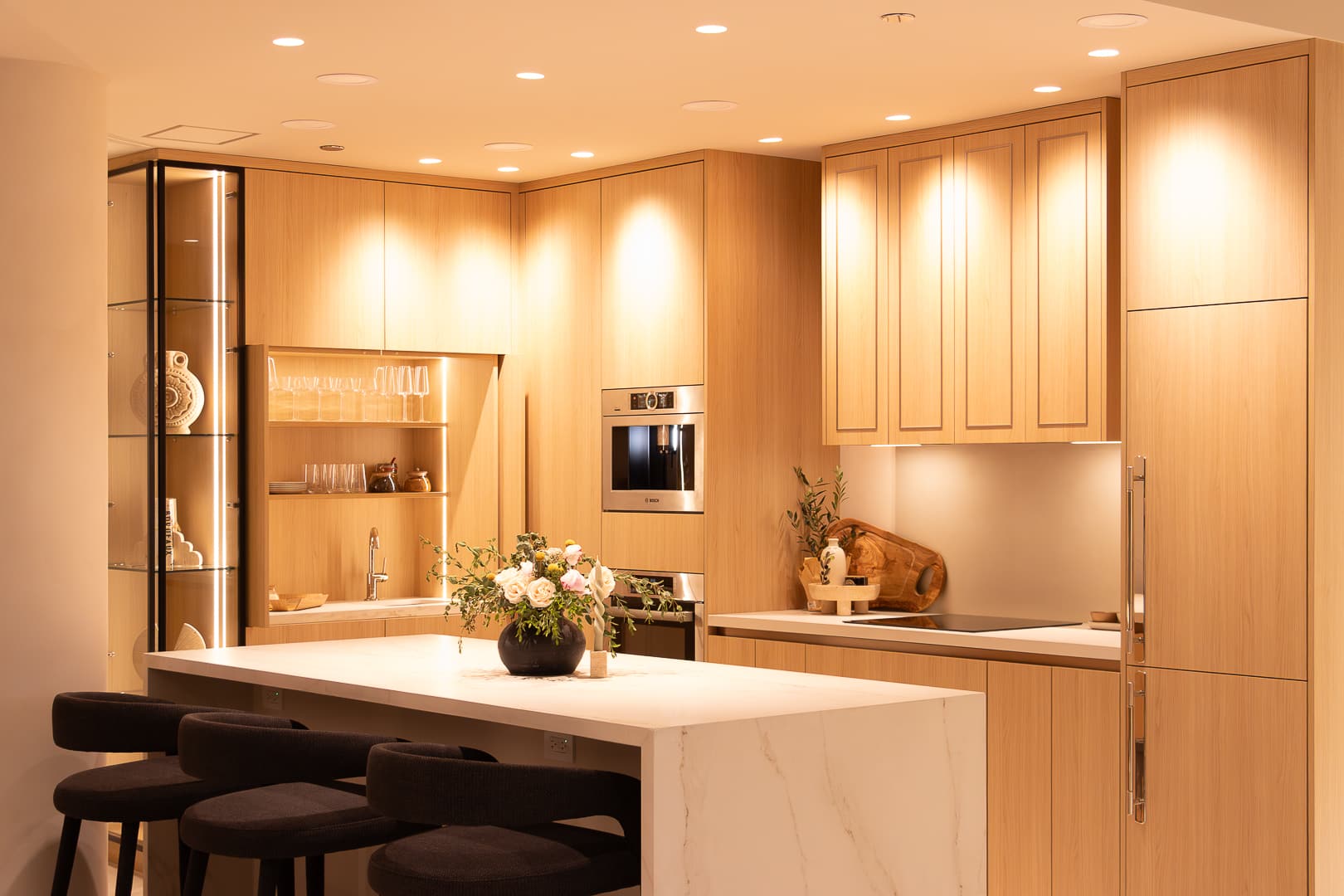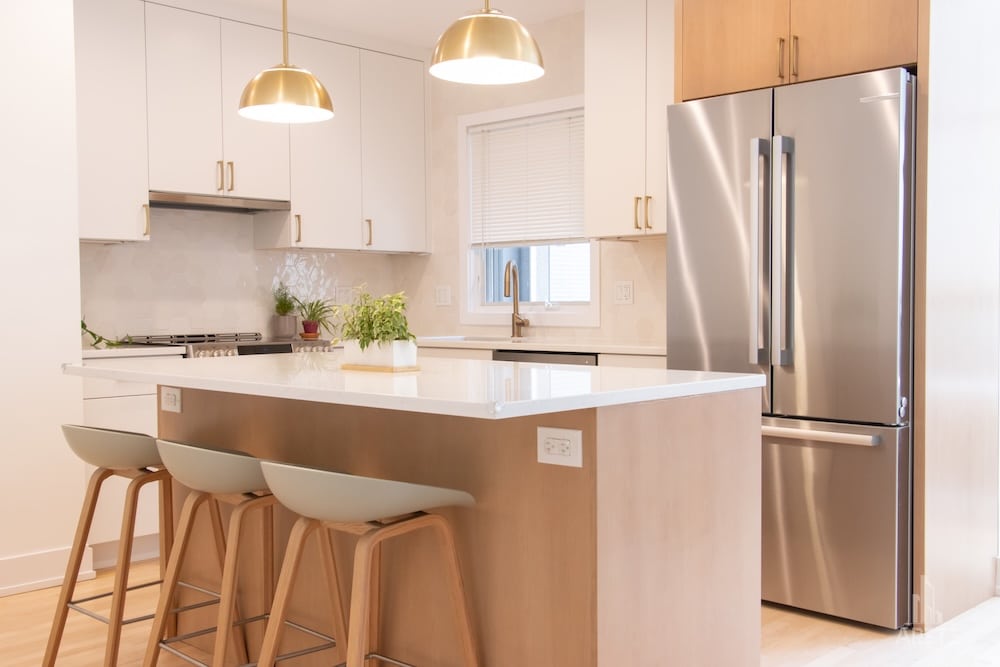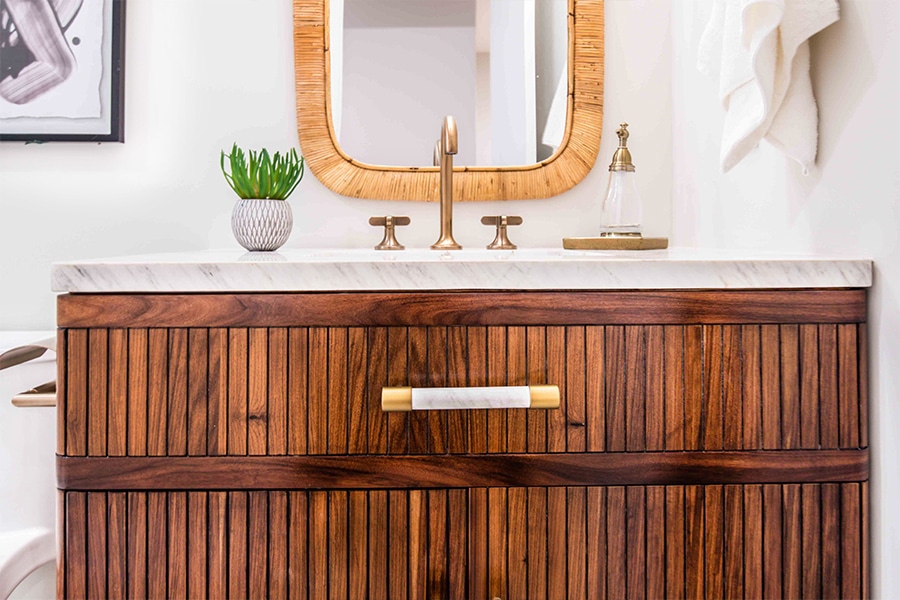







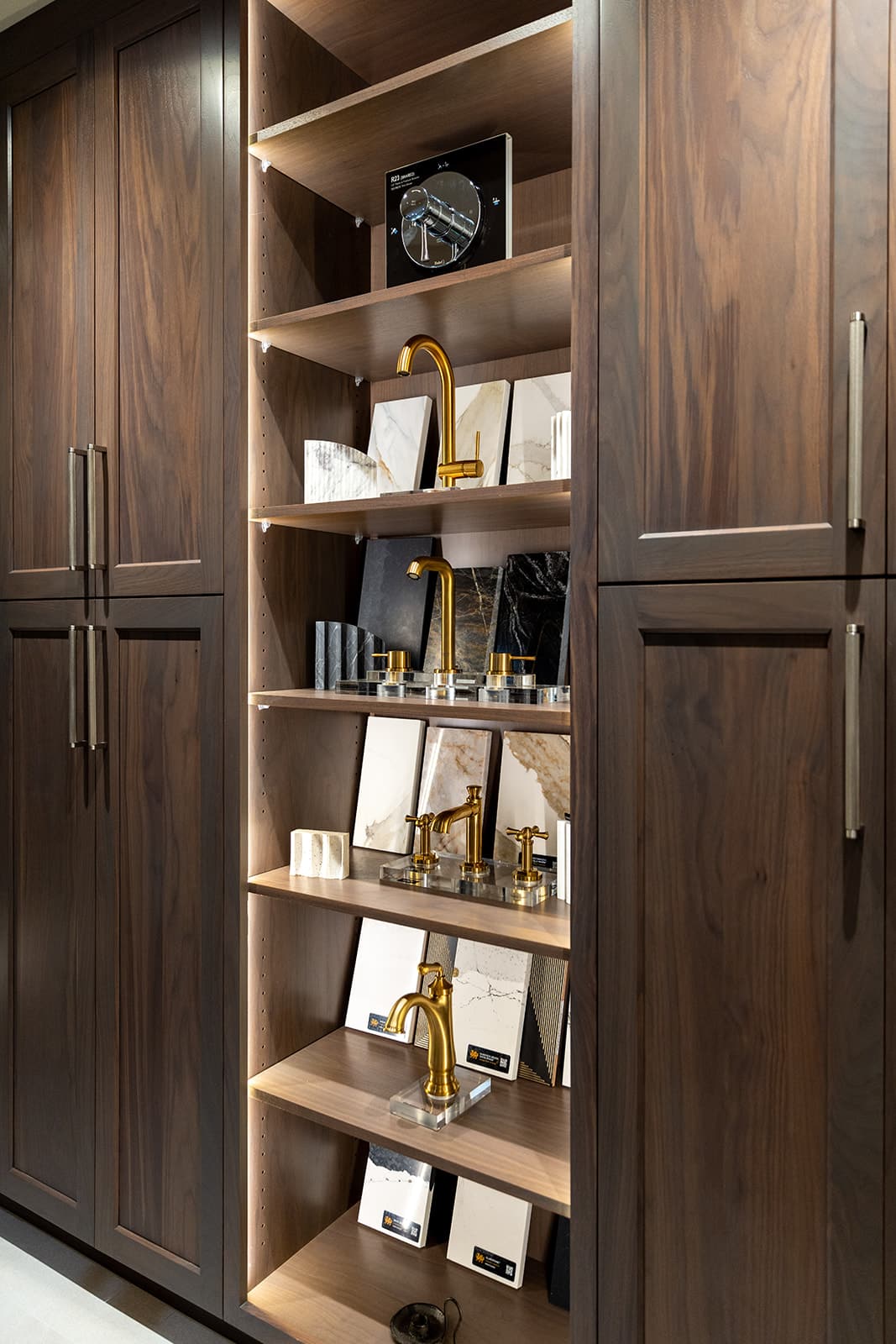
Selections are the specific products in your remodel: cabinetry, countertops, tile, plumbing fixtures, appliances, lighting and, on some projects, windows. Many are built or cut to order, and some cannot even be measured until earlier work is in place, so the day you decide quietly sets the day they arrive. Finishing your selections before demolition is the most reliable way to keep a remodel on schedule.
That is the thinking behind design-build remodeling in Chicago: the people who help you choose finishes are part of the same team that orders and installs them. This guide explains what counts as a selection, why the major ones drive the calendar, the order to make them in, and how allowances and change orders fit in.
What Counts as a Selection
A selection is any product your contractor has to buy, order or fabricate for your project. In most kitchen and bath remodels, the list includes:
- Cabinetry: door style, wood species or finish, interior fittings and hardware.
- Countertops: the material, the specific slab, the edge profile and the sink cutouts.
- Tile: floor, wall, backsplash and shower tile, along with trim pieces and grout.
- Plumbing fixtures: sinks, faucets, shower valves and trim, tubs and toilets.
- Appliances: range or cooktop, ovens, ventilation, refrigerator and dishwasher.
- Lighting: recessed, pendant, under-cabinet and vanity fixtures.
- Windows and doors, when they are part of the scope.
A choice is not final until it is specific. The Federal Trade Commission’s Hiring a Contractor guide (March 2014) says a contract should include a detailed list of all materials, with each product’s color, model, size and brand. “White oak cabinets” is a direction. A door style, a species, a finish and a complete list of cabinet sizes is a selection.
Why Selections Set the Schedule
A remodel moves like a chain. Many trades cannot start until the work before them is finished, and several links in that chain are products made for your home. A late decision rarely delays only one item. It delays everything that waits on it.
Cabinetry Is Built to Order
A cabinet lead time starts when the order is confirmed, and an order can only be confirmed once every door style, finish, size and accessory is decided.
As one dated example, Cabinetworks Group’s lead-time page (last updated October 14, 2026) listed standard production lead times of 2 to 4 weeks across its cabinet lines, and estimated total lead times of 3 to 6 weeks once delivery scheduling and transit were included. The same page notes that actual lead times can vary in regions where logistics are difficult.
Custom cabinetry runs on its maker’s own calendar, and lead times move over time. Plan around the lead time quoted for your exact line and finish, and ask for a new quote if you change either. The cabinet plan also decides where plumbing, power and ventilation land, which is one more reason it comes early.
Stone Waits for the Cabinets
Countertops are the clearest case of one selection waiting on another. Stone and quartz are cut to a template taken in your home, and that template cannot be taken early.
Caesarstone’s fabrication guidance (2021) tells fabricators that the home visit comes once the existing countertop is removed, all cabinetry is fully installed and leveled, all appliances are on site, and plumbing and electrical work is done. If the list is not complete, the visit is rescheduled and the client covers the cost of a second trip.
MSI’s countertop installation guidance adds that the sink, faucets, soap pumps and cooktop should be on hand for the template, and that an apron-front sink must be installed before templating.
So the slab, the sink, the faucet and the cooktop all need to be chosen, and the fixtures on site, by the template visit, even though the stone is not cut until after the cabinets are in. Choosing them before the cabinets are ordered is safer still, because the sink and cooktop sizes shape the cabinets beneath them. A different sink or cooktop chosen after templating, if its size differs, no longer matches the cutouts on the template.
Special-Order Fixtures, Lighting and Windows
Some finishes are made or shipped for your project rather than pulled from a shelf. Designer lighting, specialty plumbing trim, certain tiles and windows built to a measured opening can all fall into this group. Their lead times vary by maker and change over time, so the only number worth planning around is the one quoted when you order.
Some items also arrive in 2 parts. A shower valve sits inside the wall, so it is chosen, along with the trim that fits it, before the walls are closed.
The Order to Make Your Decisions
Decisions are easier when each one builds on the last. This sequence follows the order in which the construction team needs the answers:
- Layout and appliances. Appliance sizes and types shape the cabinet plan, the ventilation and the power each location needs. Good Chicago kitchen design starts here.
- Cabinetry. Door style, finish, interior storage and the full list of sizes, so the order can be placed.
- Plumbing fixtures and sinks. Valves go into the walls during rough plumbing, and the sink defines the countertop cutout.
- Countertops. Choose the material and, for natural stone, the slab itself, so it is ready when the cabinets are installed.
- Tile and flooring. Settle the material, size and pattern so quantities can be ordered together and the installer can plan the layout.
- Lighting. Fixture locations are wired before drywall, so the types and positions belong in the plan.
- Paint and decorative hardware. These go on near the end and are the safest choices to leave for last.
If you are deciding with a partner, build in time to agree. In Houzz’s 2025 Remodeling and Relationships survey of more than 540 couples who had renovated, decorated or built a home in the previous 12 months (registered Houzz users, fielded January 2025), selecting products, materials or finishes was among the most frequent sources of tension, at 28%, alongside staying on budget at 31%. Those conversations are far easier in the design phase than with a crew waiting on the answer.
Seeing samples side by side, in the light you will actually live with, makes these choices easier to settle. You can start at our Lakeshore East Design Studio at 155 N Harbor Dr.
How Design-Build Locks Selections Before Demolition
The FTC guide describes a design/build contractor as one who provides both design and construction services. For selections, that matters. When the people helping you choose finishes are part of the team that will order and install them, lead times, measurements and installation details are part of the conversation from the first meeting, not discovered after the price is set.
At Areté, design and construction sit under one roof, with an in-house interior design team, and each project is run by a Project Manager.
The goal of Chicago design-build remodeling is straightforward: settle and document your selections before demolition, so long-lead items can be ordered while the rest of the preparation is under way. When the first wall comes down, the materials are already on their way, and no one is standing in an empty room waiting for a decision.
To see how this fits the full calendar, read how long a Chicago kitchen remodel takes, and for the broader case, why design-build firms lead the way in home renovations.
Allowances Versus Final Selections
Sometimes a price has to be set before every choice is made. That is what an allowance is for. The FTC guide explains that if some materials will be chosen later, the contract should say who is responsible for choosing each item and how much money is budgeted for it. That budgeted amount is the allowance.
Allowances are useful, but they carry 2 risks:
- Budget risk. If the item you eventually choose costs more than the allowance, the difference has to be paid. Contractors handle overages, unused amounts and markup in different ways, so make sure your agreement spells out how yours works.
- Schedule risk. An allowance is a placeholder, not an order. Nothing can be ordered until the item behind it is chosen, so an open allowance on a long-lead item is a delay in waiting.
A final selection closes both gaps. Once an item has a color, model, size and brand, it can be priced exactly and ordered. The more of your project that is final before work begins, the more dependable your price and your schedule. For help setting a realistic number, see our guide to budgeting for a Chicago home remodel.
How to Avoid Change Orders
The FTC defines a change order as a written authorization to the contractor to change or add to the work in the original contract, one that could affect the project’s cost and schedule. Some change orders are unavoidable, such as when opening a wall reveals a condition no one could see. A change of mind on a finish after it has been ordered is the avoidable kind.
A few habits keep them rare:
- Finish your selections before you approve the final price, and confirm each one in writing with its color, model, size and brand.
- Ask for the quoted lead time on every special-order item, and order the longest ones first.
- Review samples with everyone who has a vote before anything is ordered.
- Ask before you sign how a change to an item that has already been ordered is handled.
- Keep the paperwork together. The FTC recommends keeping copies of the contract, change orders, correspondence and a record of all payments in one place.
Frequently Asked Questions
What Are Selections in a Remodel?
They are the specific products your contractor will order or fabricate: cabinetry, countertops, tile, plumbing fixtures, appliances, lighting and, on some projects, windows. A selection is final when it names the color, model, size and brand.
When Should I Make My Selections?
Before demolition, and ideally before you approve the final price. Appliances, cabinetry and plumbing fixtures come first, because other work depends on them.
Why Do Countertops Wait Until the Cabinets Are Installed?
Stone and quartz are cut to a template taken in your home, and Caesarstone’s guidance calls for the cabinets to be fully installed and leveled before that visit. You can choose the material and the slab early; fabrication follows the template.
How Long Do Cabinets Take to Arrive?
It depends on the maker and the line. As one example, Cabinetworks Group listed estimated total lead times of 3 to 6 weeks for its lines as of October 14, 2026. Custom work varies, so plan around the lead time quoted for your exact order.
What Is an Allowance?
A budgeted amount for an item that will be chosen later. Your agreement should say who chooses it, how much is budgeted, and how a higher or lower final cost is handled.
Can I Change a Selection After It Is Ordered?
Usually through a written change order, which can affect both cost and schedule. Ask before you sign how changes to items already ordered are handled.
If you would like your selections settled before the first wall comes down, our design and construction team would be glad to help. Schedule a consultation or call 773.683.3033.